A town notice went up on the 6th Avenue Boat Ramp page in mid-August, the kind of one-paragraph posting most residents scroll past without a second look. The area south of the ramp is cordoned off. The ramp itself still works. Stay clear of the fenced section. That's the whole notice.
Two hundred yards up Oak Street sits the building that solved this exact problem seven decades ago, and it didn't get bigger either. It got floated down the river instead.
That's not a coincidence of small-town budgets. It's the operating instinct of a place that calls itself Brevard County's oldest beach community, established in 1883, and has spent more than a century proving it by moving things rather than replacing them.
The Town Hall That Never Got Torn Down
The building now known as the Old Town Hall History Center started in 1908 as the office of the Melbourne Beach Improvement Company, the developers who platted the streets and pier that still shape the town today. It sat facing the Indian River Lagoon in what is now Ryckman Park. Over the following decades it became the town hall and post office, the working center of a community that hadn't yet built anything to replace it.
When the town outgrew that building, the fix wasn't demolition. The town built a new town hall at 507 Ocean Avenue in 1959, on a budget documented at just under $9,900, and the old building didn't disappear. It was floated down the river, relocated near the golf course, then moved once more to its current spot on Oak Street. In 2007, after years of petitions and volunteer work, it reopened as a museum. The same walls that once processed town business now hold exhibits on the Ais people, Spanish shipwrecks, and the pineapple farms that gave the original settlers their livelihood before a 1894 freeze wiped the crop out for good.
A few hundred feet away, the Ryckman House has stood since 1890. The Community Chapel went up in 1892 and has held continuous service ever since, more than 120 years without interruption. Nobody tore either one down to build something more efficient. The town simply kept using what it already had.
The Ramp Nobody Widened
The 6th Avenue ramp has a reputation among the boaters who actually use it: fine for a jon boat, a kayak, or a paddleboard, but anyone hoping to trailer something in the 17 to 20 foot range usually finds out the hard way that the water shallows out fast and the parking never accommodated a truck and trailer to begin with. Residents who want to launch anything larger already know to head to the Front Street ramp instead, or south toward Sebastian Inlet.
So when the town cordoned off the ramp's south section this August, it wasn't a capacity upgrade deferred. It was the same math the town has been running since 1953: when something gets too small for what people actually need from it, the answer is to manage the smaller footprint, not expand it.
Why the Timing Stings This Particular Fall
The closure lands at an inconvenient moment. Snook season opened September 1 on the Indian and Banana River lagoons that run along this same shoreline, and local fishing reports describe a consistent bite through the month, snook holding alongside mangrove snapper, seatrout, redfish, and the occasional tarpon. Anglers who've fished this stretch for years know the pattern: an early morning window before the water heats up, then a slower afternoon. The same six blocks of shoreline that residents use to launch a kayak for that bite now have less usable ramp than they did in July, right as the season everyone waits for finally opened.
The Same Six Blocks, Every Season
Ryckman Park isn't just where the boat ramp sits. It's the only public green space in town large enough to hold a real event, which is why the town's calendar keeps landing in the same spot no matter the month.
| Event | When | Location |
|---|---|---|
| Founders Day | May 2 | Ryckman Park |
| Fall Family Fun Day | October 19 | Ryckman Park |
Founders Day is the town's own description of its most anticipated event of the year, and this fall brings the Fall Family Fun Day, running 3 to 6 p.m. with carnival games, food trucks, hayrides, and a petting zoo. Different season, same acreage. The town doesn't rotate its major gatherings through different venues because it only has the one venue built for it, and that venue is the park that also happens to house the boat ramp currently missing its south end.
What Sits Along Those Same Two Blocks
Walk west from the park toward the river and the pattern holds at street level too. Melbourne Beach Supermarket, a family-run market and deli at 302 Ocean Avenue, has built a following for its olive bar, wine selection, and made-to-order sandwiches in a town with no chain grocery footprint within easy walking distance. Down the street, a small gallery keeps rotating work from local painters, sculptors, and potters, giving Ocean Avenue its one dedicated art space rather than several competing ones.
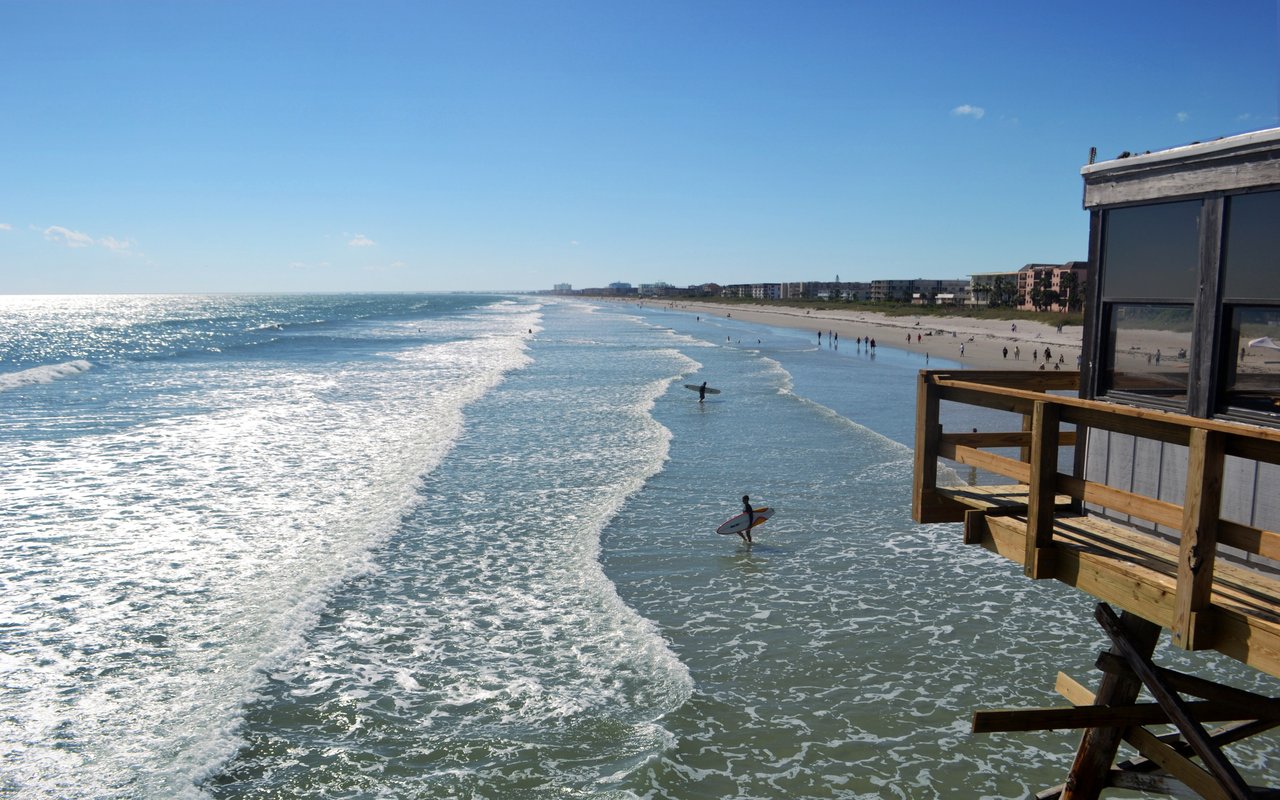
At the very end of Ocean Avenue, the surf break has its own quiet reputation. It's known to regulars as the home turf tied to Eastern Surf Magazine, and the sand here shifts enough over a year to turn the wave from a mushy shorepound into something with real shape. The bottom stays deep enough that the break rarely closes out the way most Central Florida spots do on a big swell, which is part of why longboarders and younger surfers alike keep showing up to the same stretch instead of driving elsewhere.
What This Pattern Means If You Live Here
None of this is really about a boat ramp or a museum. It's about what happens when a town's entire public footprint was built once, in the 1880s and 1900s, for a population that fished and farmed on a much smaller scale, and has never been meaningfully expanded since. Melbourne Beach doesn't solve its space problems by building more space. It solves them by relocating what it has, cordoning off what it can't fix immediately, and trusting that the same six blocks around Ryckman Park will keep doing double and triple duty the way they always have.
If you've lived here a while, you've probably already noticed this without naming it. The ramp closure is just the most recent version of a decision the town has been making since 1953. It won't be the last.
For residents thinking about what any of this means for a specific piece of property near the water in Melbourne Beach, from ramp access to flood elevation to how close a lot sits to that same shifting shoreline, Alyssa Boyd has spent decades working these barrier island blocks and can walk you through what the town's history actually means for the address you're looking at. Reach out to request a private concierge consultation.